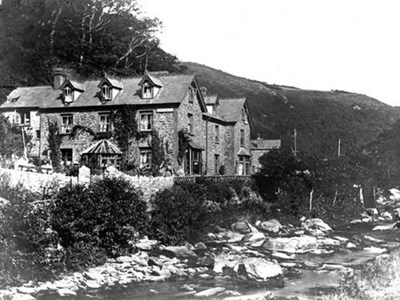
Summer, 1901
Early times
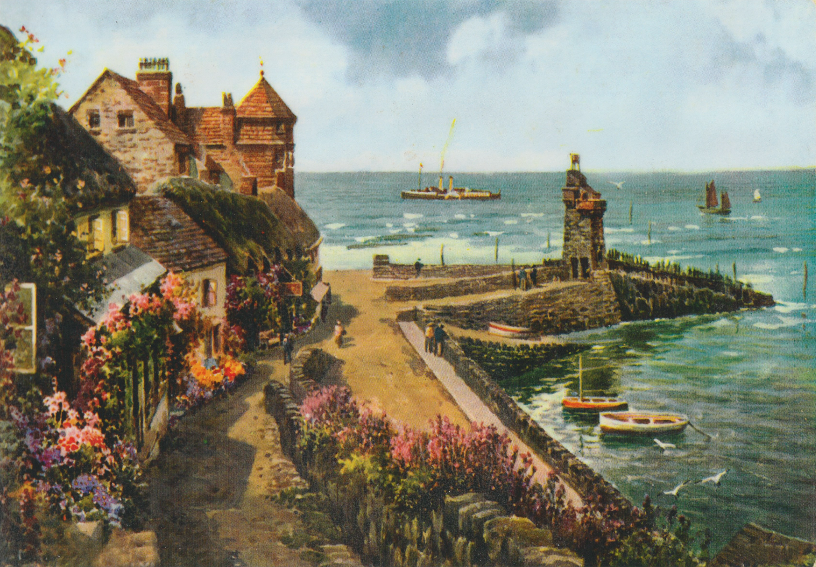
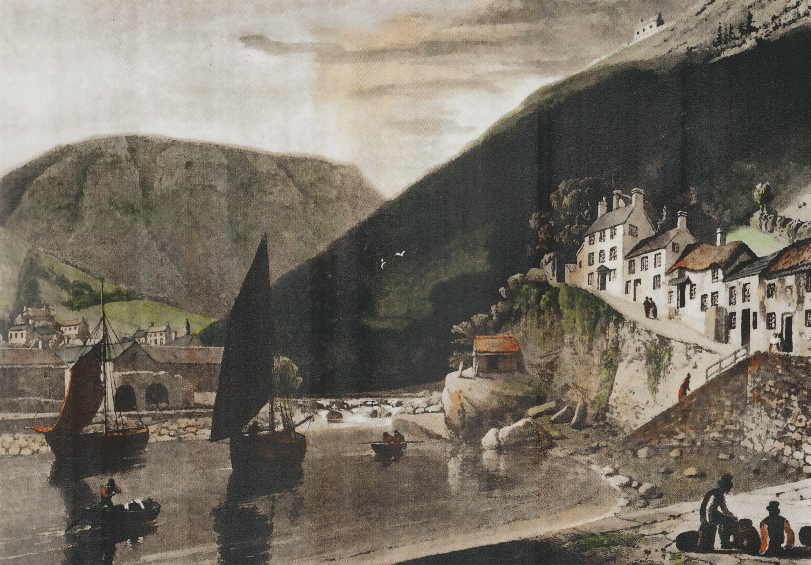
Nestled in Exmoor National Park, Lynmouth transformed during the Victorian era, shifting from a fishing and trade hub to a thriving tourist destination with the advent of the railway. Today, the village retains its Victorian charm in architecture and community spirit, welcoming visitors to experience its picturesque harbour and moorland.
The captain
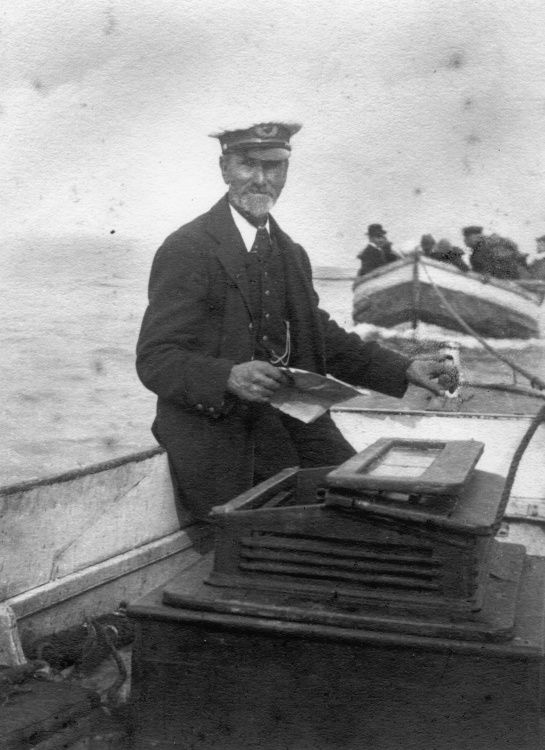
The famous Captain Jack Crocombe who was the skipper of the LOUISA lifeboat crew of 1899 who hauled the lifeboat overland for 13 miles from Lynmouth to Porlock Weir and rescued the Forrest Hall ship. This later photo shows Jack ferrying passengers from a steamship into Lynmouth Harbour around 1900’s.
The long journey
Approximately 100 local residents assembled to transport the Louisa, a 10-meter-long, 10-ton vessel, with the assistance of 18 horses provided by a nearby farm. Preceding the challenging ascent up Countisbury Hill, six individuals were dispatched with shovels to modify sections of the road.
Following the arduous climb, the gathering paused at the Blue Ball Inn for refreshments. During this break, they addressed a carriage wheel issue. The majority of the initial 100 helpers decided to turn back, leaving only 20 men, including the 14 lifeboat crew members, to guide the boat downhill into Portlock. At certain points, the boat had to be pulled on skids due to the narrowness of the road, making it impossible to widen.
These 20 men skillfully maneuvered the vessel down the treacherous Portlock Hill terrain, even dismantling a section of a garden wall to facilitate the passage of the carriage and horses.
The Forrest Hall
The rescue
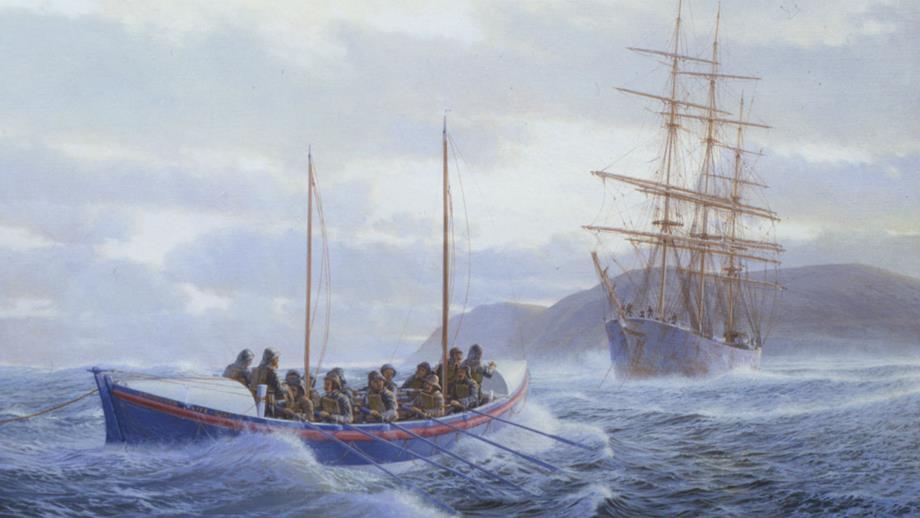
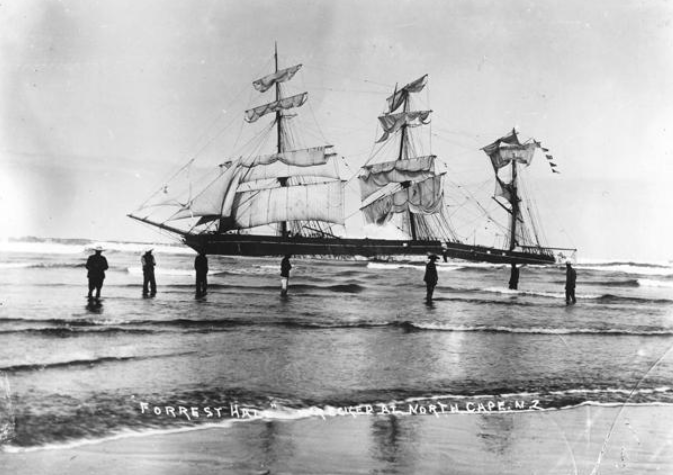
The men successfully reached the sea by 6:30 am on January 13th, concluding their nearly 11-hour journey. Despite fatigue and hunger, they promptly launched the boat, spending an additional hour rowing through rough seas and a fierce storm to reach the Forrest Hall. Positioned close to Hurlstone Point, the lifeboat remained vigilant, rowing continuously to maintain a safe stance.
As daylight broke, two tugs arrived, successfully securing a tow rope to the ship. Some lifeboatmen from the Louisa boarded the Forrest Hall, assisting the weary sailors in raising their anchors. The tugs safely towed the ship across the channel to Barry, accompanied by the lifeboat to address any potential challenges. They reached their destination unscathed by 6 pm that evening. The Lynmouth lifeboat crew rowed back, arriving home at 11:30 am on January 14th. This remarkable and arduous rescue ensured the survival of all 18 Forrest Hall crew members, solidifying its place as one of the most challenging feats in RNLI history.
Captain Jack Crocombe and this house appearing in award winning feature film “Louisa: An Amazing Adventure 2021”
The Captain’s House holds another poignant history, having been the residence of Captain William Burgess. Tragically, Captain Burgess lost his life in 1942 during the Second World War when his ship, the ‘Llandilo,’ a steam merchant vessile that was torpedoed in the South Atlantic. This occurred during its voyage from Cape Town, South Africa, to Trinidad in the Caribbean. BURGESS W. R. B.
 The Captains House B&B